.png)


Nat Turner's 1831 Southampton Rebellion: A Deep Dive
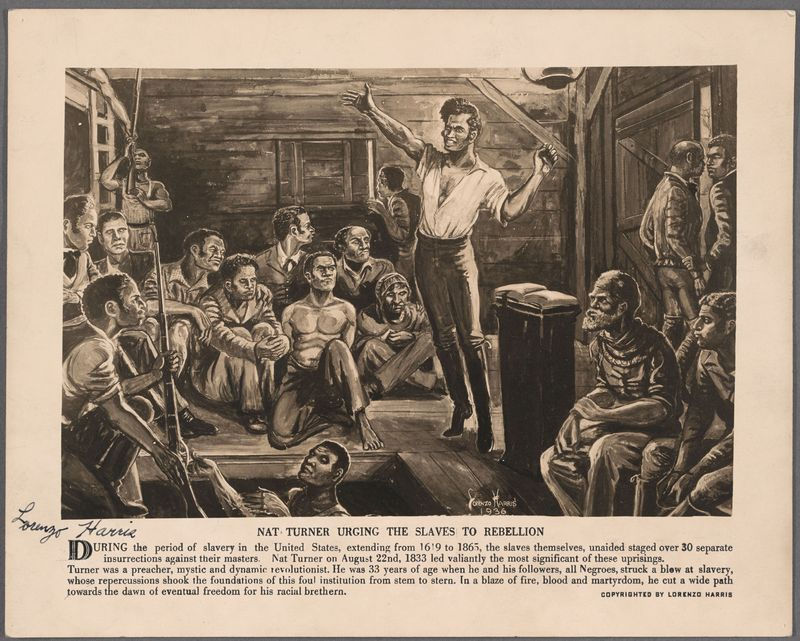
Nat Turner's Rebellion, also known as the Southampton Insurrection, was a pivotal slave uprising in August 1831 led by enslaved preacher Nat Turner in Virginia. It stands as the deadliest revolt against enslavers in U.S. history, killing 55-65 white people and sparking widespread retaliation.
Nat Turner's Background
Born October 2, 1800, in Southampton County, Virginia, Turner was enslaved from birth on small plantations. His African-born mother instilled hatred of slavery, and he learned to read, earning the nickname "the Prophet" for his religious influence among enslaved people. By his 20s, visions convinced him God called him to lead his people from bondage, interpreting signs like a 1831 solar eclipse as divine mandates.
Causes and Visions
Turner's motivations stemmed from fervent Christianity, seeing himself as a biblical prophet akin to Moses. Everyday slavery horrors, family separations, whippings, and sales, fueled resentment in Southampton, where Black people outnumbered whites. A bluish-green sun on August 13, 1831, finalized his signal to act, rejecting July 4th due to illness.
The Rebellion Unfolds
On August 21, Turner and six trusted enslaved men, Henry, Hark, Nelson, and Sam killed Joseph Travis's family, his final enslaver, then moved house-to-house. Over 48 hours, 50-70 rebels armed with axes and knives killed 55-65 whites, including 20-30 children, sparing some poor whites and avoiding Turner's wife's plantation. Militia crushed them at Belmont Plantation on August 23.
Suppression and Capture
White militias from Virginia and North Carolina, with naval support, killed up to 120-200 Black people enslaved and free in retaliation, many innocent; heads were displayed on poles. Turner hid for 10 weeks in Southampton woods, captured October 30 by Benjamin Phipps, then confessed to lawyer Thomas R. Gray.
Trials and Execution
Special courts tried dozens; 30 enslaved were convicted, 18 hanged including Turner on November 11, 1831, after a guilty verdict for insurrection. His body was flayed for souvenirs; The Confessions of Nat Turner, published by Gray weeks later, sold 40,000-50,000 copies as the key primary source.
Immediate Aftermath
Panic spread southward, with rumors of wider revolts; Virginia's legislature rejected emancipation, passing "slave codes" banning Black education, assembly without white ministers, and free Black rights. Southern states echoed these, criminalizing abolitionist materials.
Long-Term Legacy
The revolt shattered myths of docile enslaved people, hardening proslavery views as a "positive good" while fueling Northern abolitionism like William Lloyd Garrison's The Liberator. Today, Turner symbolizes resistance; sites like Rebecca Vaughan House are preserved, and it's commemorated in Black August. Modern views hail him as a justice warrior, despite debates over violence.
CITATION
Primary Sources
The Confessions of Nat Turner, the Leader of the Late Insurrection in Southampton, Va. (1831) by Thomas R. Gray, based on Turner's jailhouse interviews. Available at [docsouth.unc.edu ()] and [loc.gov ()].
Eyewitness accounts and court records from Southampton County, summarized in [encyclopediavirginia.org ()].
Scholarly Books
Nat Turner: A Slave Rebellion in History and Memory by Kenneth S. Greenberg (2003), Oxford University Press.
The Southampton Slave Revolt of 1831 by Henry I. Tragle (1971), updated editions.
Tales from a Troubled Land by John W. Cromwell on aftermath.
Articles & Online Resources
"Nat Turner's Revolt (1831)" on Encyclopedia Virginia.
"Black Women and the Southampton Rebellion" by Vanessa M. Holden, AAIHS.
Smithsonian Magazine: "Understanding the Gospel of Nat Turner".
National Museum of African American History: Striking for Freedom exhibit.
Modern Analyses
JSTOR: "The Aftermath of Nat Turner's Insurrection".
ABHMuseum: "Nat Turner's Rebellion: Horrific or Heroic?".
Wikipedia entries with extensive references.


Comments